Mexico has long “enjoyed” the reputation in the public imagination as a place of difference; a country steeped in romance as well as danger. Constant in this persistent bifurcation, however, has been the idea of Mexico’s culture, places and people as extraordinary, surreal, and even magical. Whether the colorful representations of Día de los Muertos in tourist brochures or films such as Coco, or the (believed to be) satanic sorcery of narcos and Santa Muerte, popular media and other culture industries have portrayed Mexico as both a place of leisure and one torn by violence, corruption, and terror. News media and popular culture, however, are not the only forces in these constructions as they show up in academic work as well.
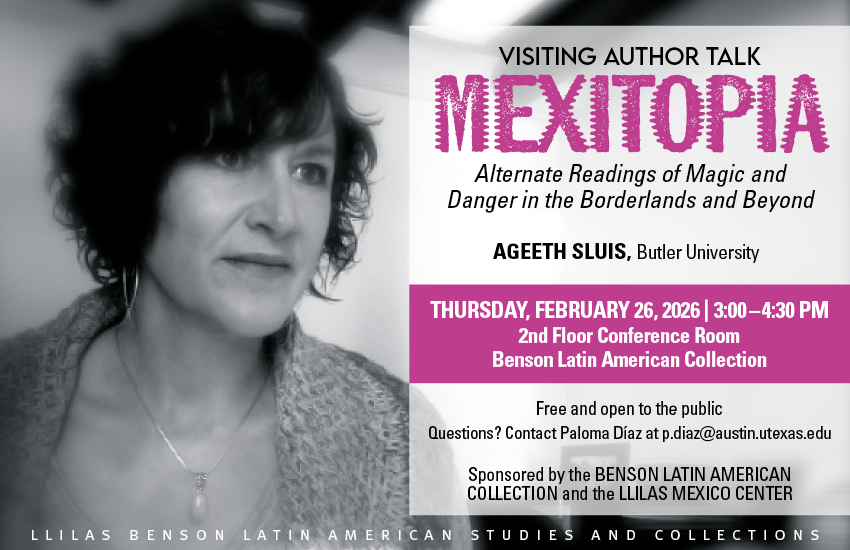
In Mexitopia: Alternate Readings of Magic and Danger in the Borderlands and Beyond, historian Ageeth Sluis demonstrates that representations of "magical Mexico" not only have a long history with far-reaching economic and political ramifications—resonating in immigration debates, fears about narco-trafficking and US foreign policy today—but also shows how this process is echoed, informed—and ultimately can be subverted—in historical production. Taking histories of shamanism and brujería as a point of departure, the talk explores the importance of understanding historical entanglements between the academy and popular culture in the production of “Mexitopia” and aims to strategically intervene in the production of historical memory.
Sponsored by the Benson Latin American Collection and the LLILAS Mexico Center.
The talk is free and open to the public. Public transit/ride share encouraged, and the closest campus parking is Manor Garage.
Location: Benson Latin American Collection, Sid Richardson Hall 1
Room: SRH 1.208 (Benson 2nd Floor Conference Room)
Address: 2300 Red River St, Austin, TX 78712